
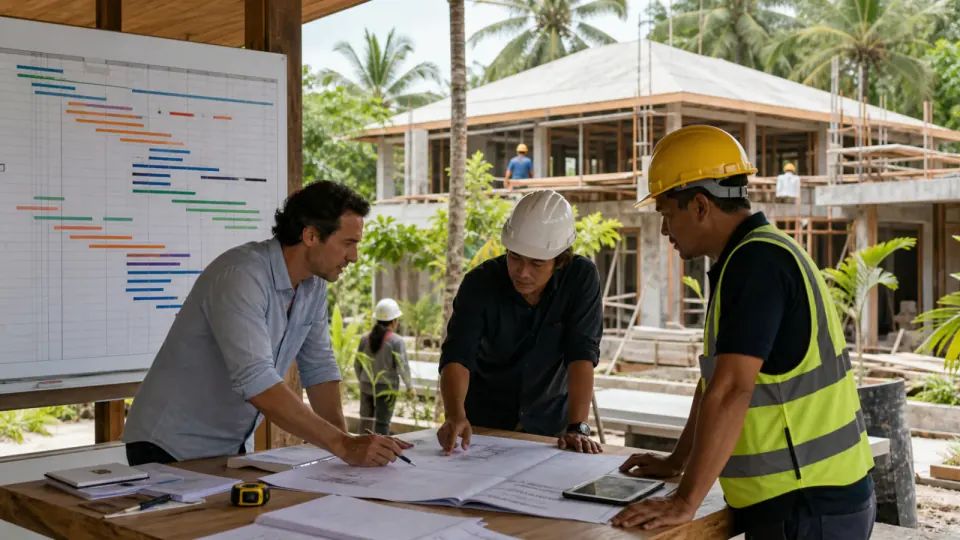
BALI SERVICE
Construction Project Management
Managing coordination, schedule, quality, cost, risk, changes and reporting from preparation through handover.
FIELD CONTEXT
See the relevant conditions, process and control points.
Images clarify the scope of discussion. Final conditions and methods still follow the survey, documents and actual engagement boundaries.
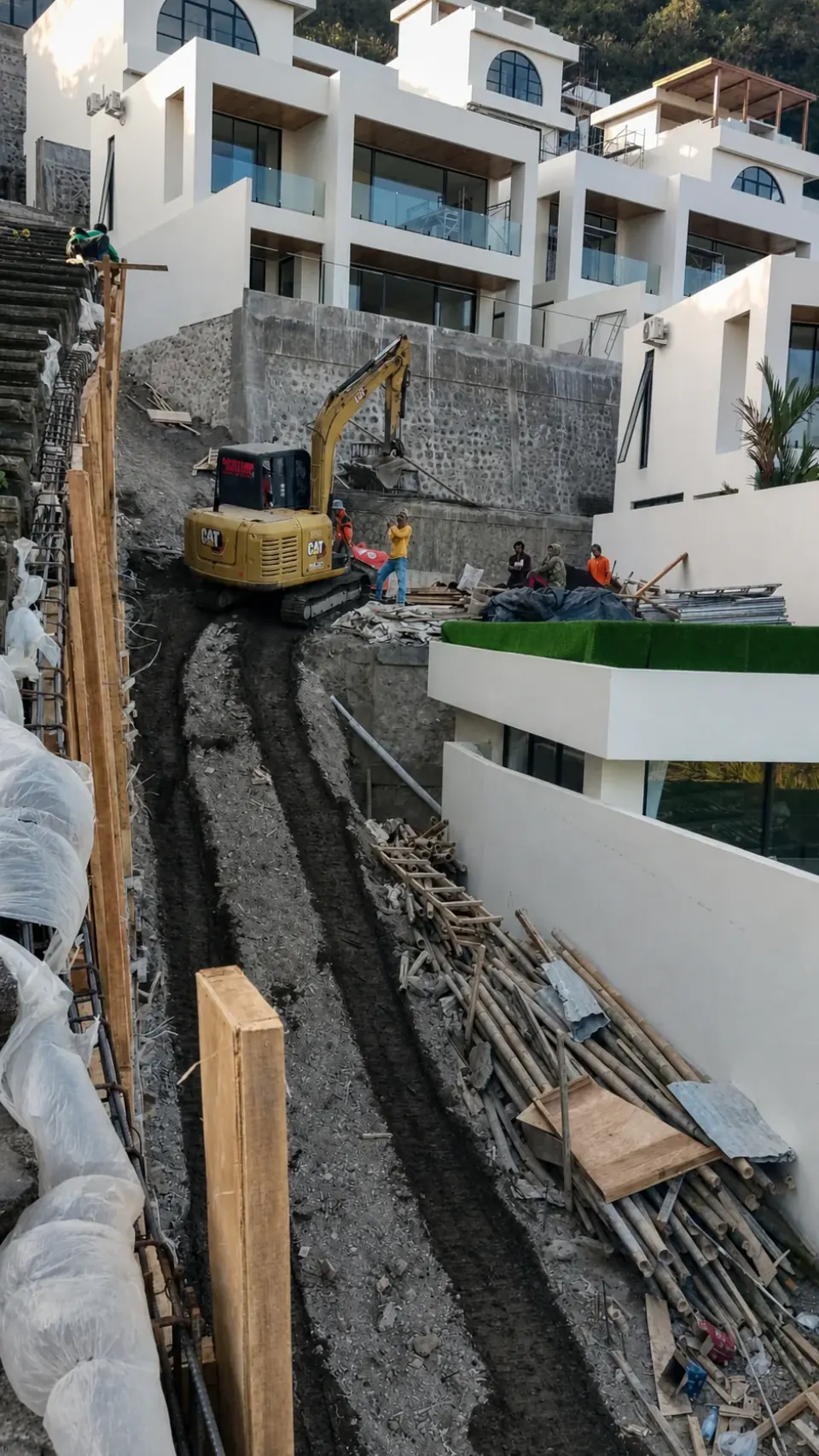
Site documentation shows how access, contour, heavy equipment, materials and surrounding buildings affect the work method.
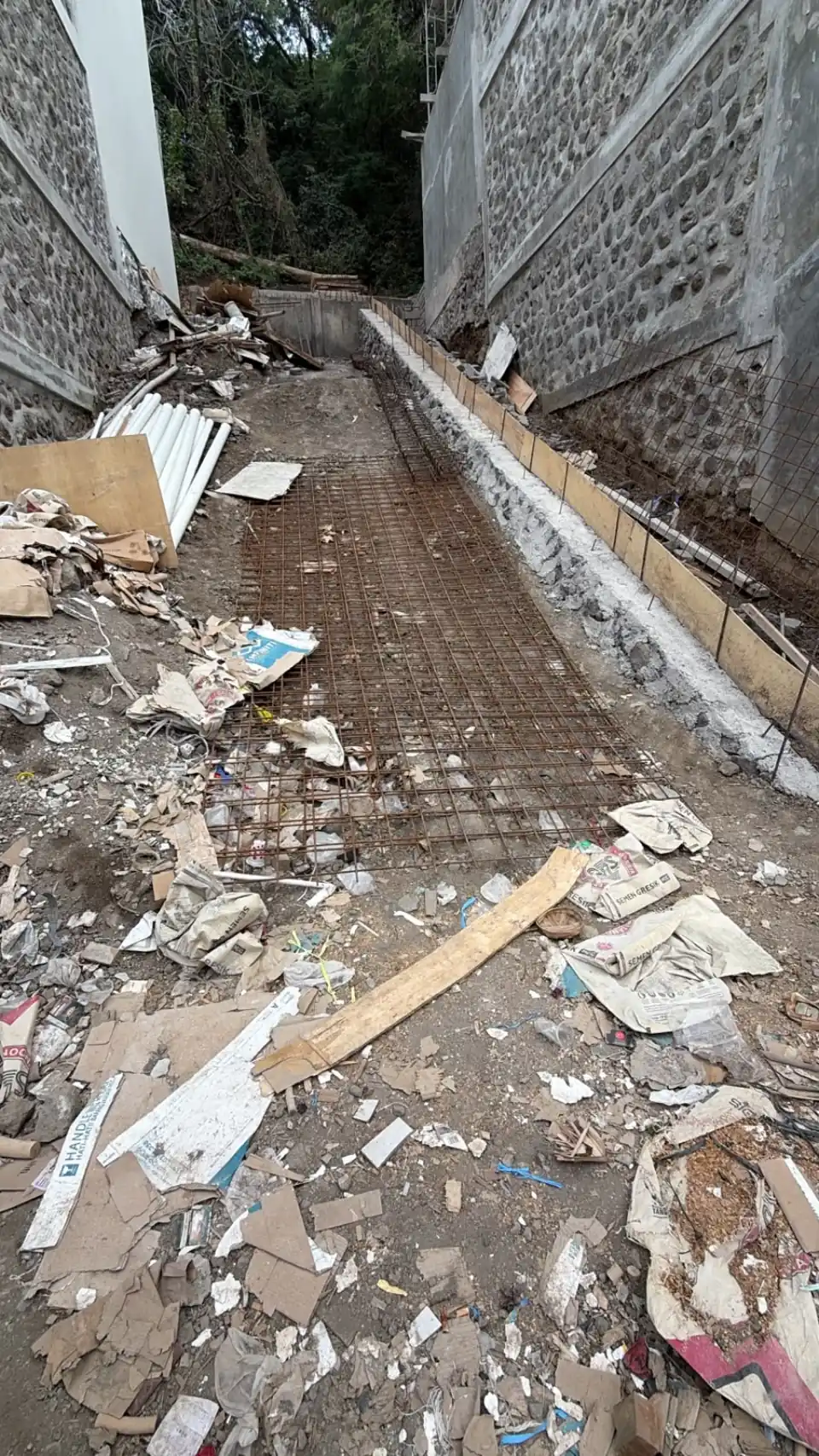
Pre-pour documentation records reinforcement, route boundaries, substrate condition and areas still requiring housekeeping.
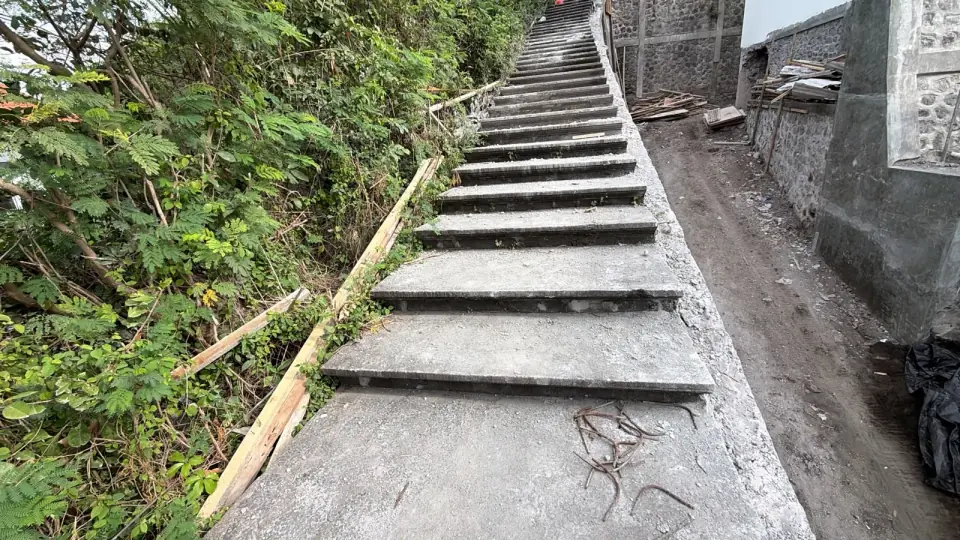
Tread geometry, levels, edges, relationship to the slope and work access should be checked before finishing.
SERVICE FIT
When to choose Construction Project Management?
Project management connects owner objectives with parties, records, decisions, programme, cost, risk, procurement, delivery and close-out. Its role should be distinguished from contractor, designer, supervisor, QC, quantity surveyor and owner representative.
- Projects with several consultants, contractors, vendors or phases
- Owners needing one decision and reporting system
- Scope, programme, cost, risk and change affect one another
- Projects requiring reset or stabilisation after coordination problems
DECISION PURPOSE
Start with the decision that needs to be made.
The project execution plan defines governance, roles, baselines, authority, meetings, reporting, approvals, change, escalation and close-out. Technical, legal and professional decisions remain with competent authorised parties.
Final scope is set after understanding the location, project stage, documents, involved parties, timeline and reporting needs.
Execution planning and coordination
Schedule and risk controls
Contractor and vendor evaluation
Owner decision reporting
RISKS TO MAP
Items to understand before moving forward.
This is not an automatic conclusion. Each item should be tested against documents, actual conditions and agreed responsibilities.
No agreed scope, programme, cost or responsibility baseline
Decisions are delayed by unclear authority routes
Changes proceed before impact and approval are recorded
Activity reports omit risk, deviation or priority actions
DELIVERABLES
Project execution plan
Objectives, organisation, roles, communication, baselines, controls and close-out phases are defined.
Integrated register
Decisions, risks, actions, changes, submittals, procurement and interfaces remain traceable.
Management report
Programme, cost, quality, risk, decisions and exceptions are summarised for the owner.
Close-out plan
Testing, commissioning, defects, final records, training, handover and outstanding items are mapped.
ENGAGEMENT FORMAT
Scope and duration follow actual conditions.
May cover selected phases or a broader project lifecycle. Attendance, meetings, reporting, disciplines, authority and interfaces with owner teams or specialists are defined in scope.
The final proposal states visits or stages, reporting format, involved parties, exclusions and conditions that may change timing.
WORKFLOW
From initial clarification to recorded follow-up.
Clarify
Goal, location, stage, documents, parties, schedule and main decision.
Define scope
Methods, visits, sources, limits, deliverables and report frequency.
Review
Collect evidence, compare information, record gaps and escalate material issues.
Follow up
Separate facts, assumptions, recommendations, decisions, owners and closure status.
STARTING INFORMATION
Information that makes the scope more precise.
- Project location or target area and available access notes.
- Objective, current stage, urgent decisions and deadlines.
- Existing documents, photographs, proposals, drawings, schedules or communication.
- Involved parties and the responsibilities currently understood.
RELATED GUIDES
Prepare better questions before a consultation.
Warning Signs a Construction Project Is Going Off Track
Unrecorded changes, inconsistent reports, delayed decisions, concealed work without inspection and unsupported claims are warning signs requiring follow-up.
Project ReportingWhat a Project Supervision Report Should Include
A useful supervision report connects progress, photographs, issues, decisions, actions, owners, targets and closure evidence in a consistent format.
FREQUENT QUESTIONS
Questions before requesting the service.
These answers help prepare the initial information. Price, schedule and availability are confirmed against the actual location and scope.
How does project management differ from supervision?
Project management integrates scope, time, cost, risk, parties and decisions. Supervision focuses more on field conditions and delivery within scope.
Does a project manager replace the contractor?
No. The contractor remains responsible for methods, labour, equipment, safety, quality, programme and contract duties unless documents state otherwise.
Can project cost be controlled?
It may be coordinated through baselines, commitments, forecasts, variations, claims and reporting, with a quantity surveyor or competent adviser where needed.
RELATED SERVICES
Discuss Construction Project Management for your project location.
Include location, work type, approximate quantity, condition photographs, target timing and daily or package preference so the request can be assessed faster.