
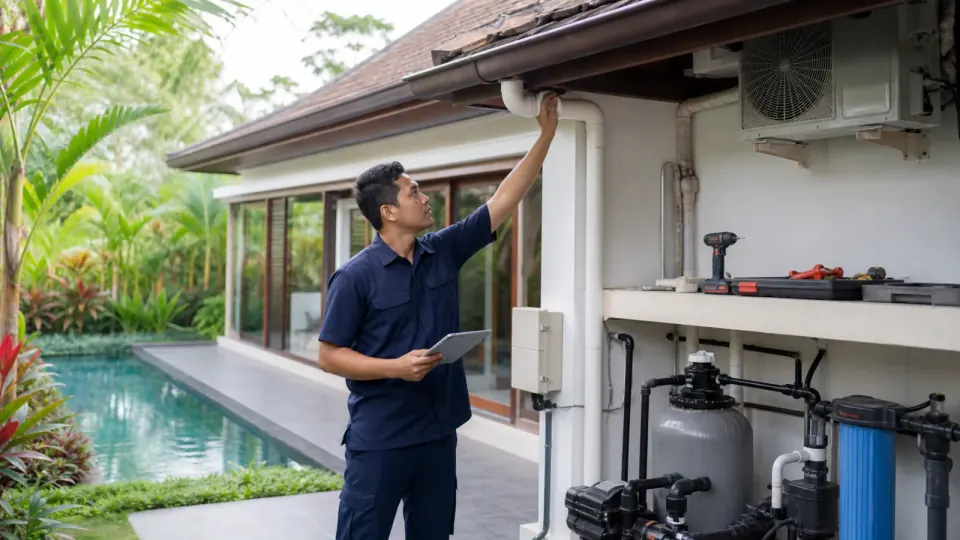
BALI SERVICE
Property Maintenance Coordination
Periodic inspection and preventive maintenance coordination for villas, homes, hotels, resorts, boarding houses and commercial buildings.
FIELD CONTEXT
See the relevant conditions, process and control points.
Images clarify the scope of discussion. Final conditions and methods still follow the survey, documents and actual engagement boundaries.
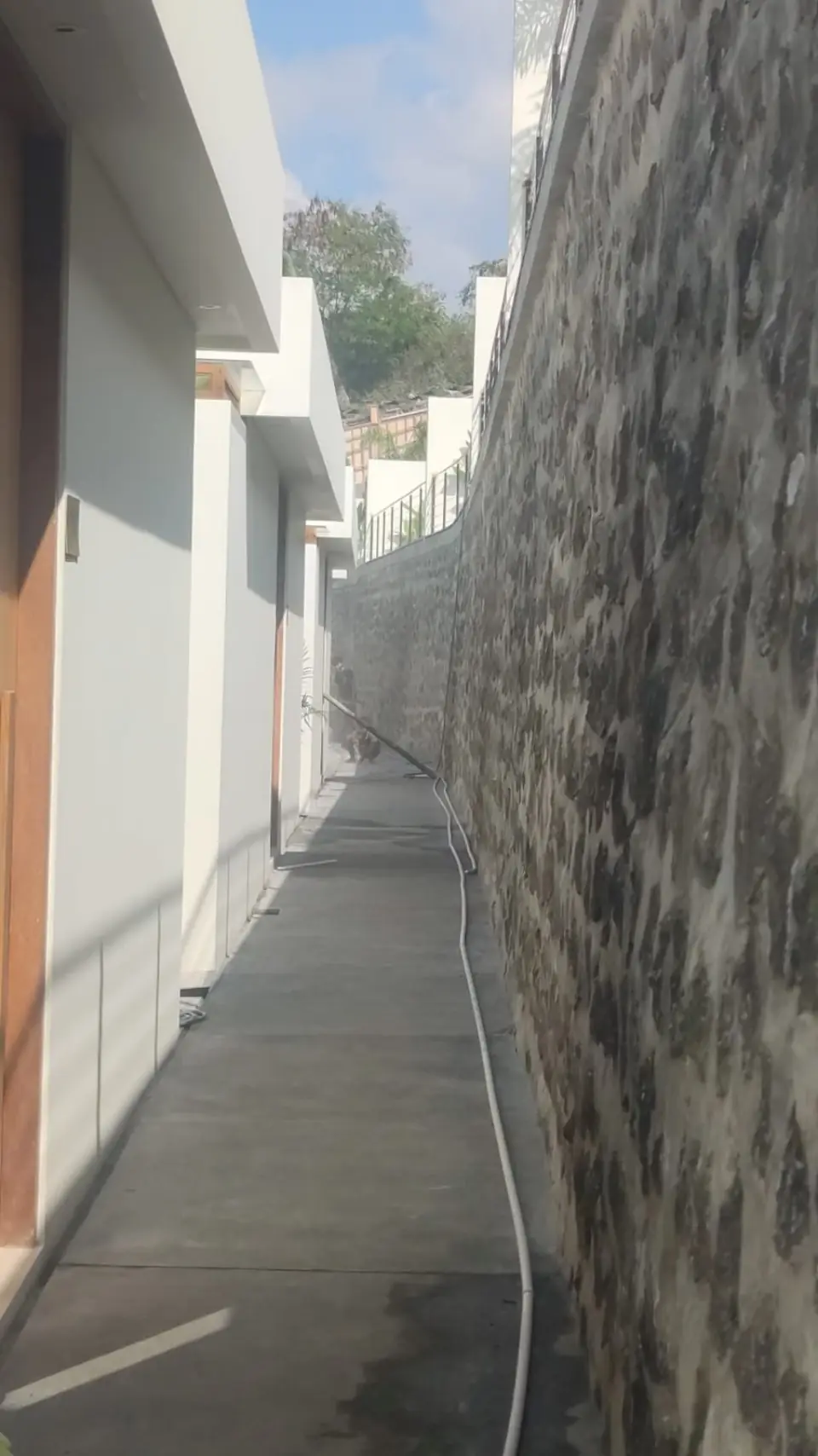
Corridor documentation helps verify access, surface drainage, housekeeping and readiness for the next work stage.
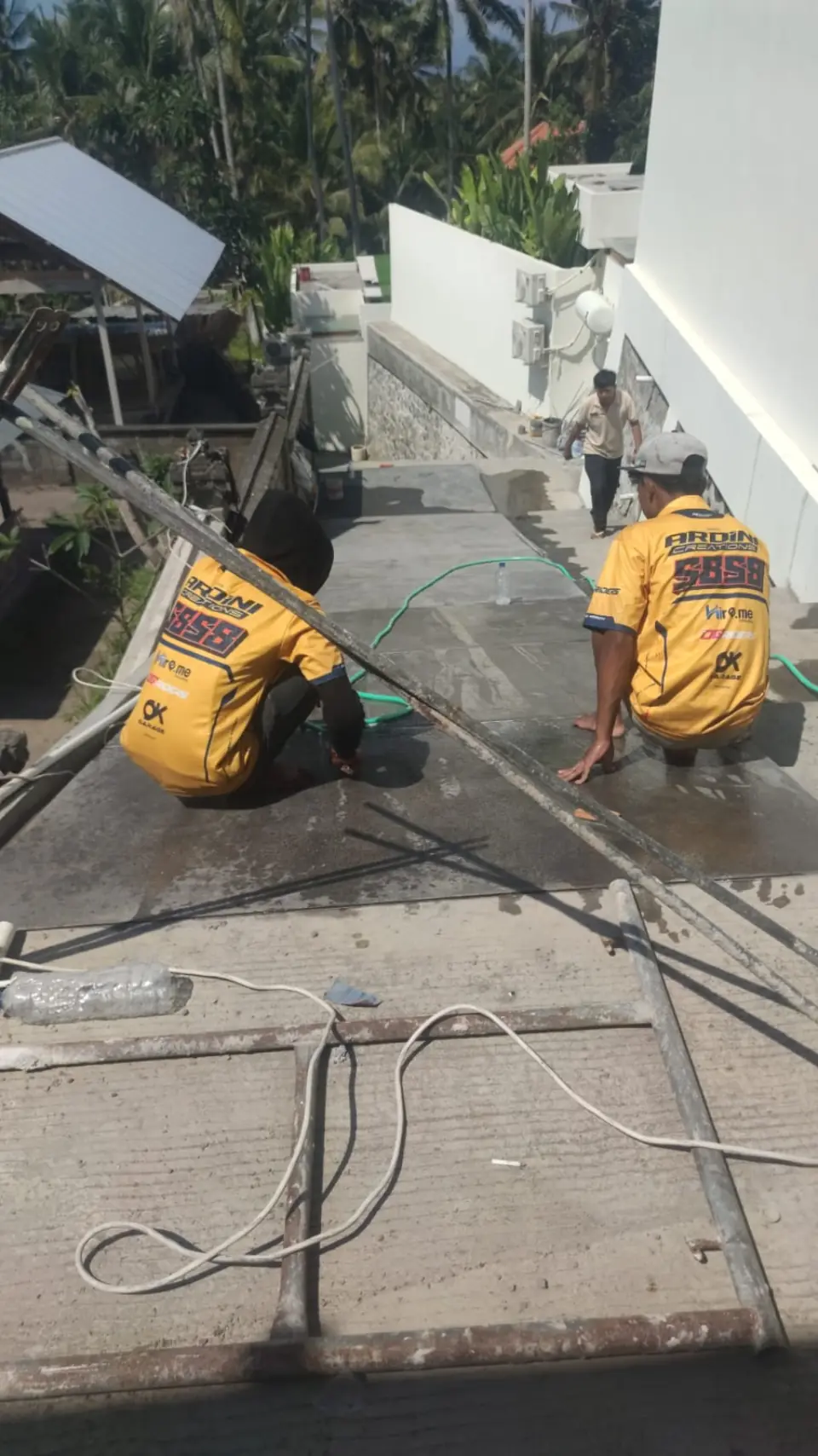
Surface cleaning is carried out before inspection, local repairs or the next finishing system is applied.
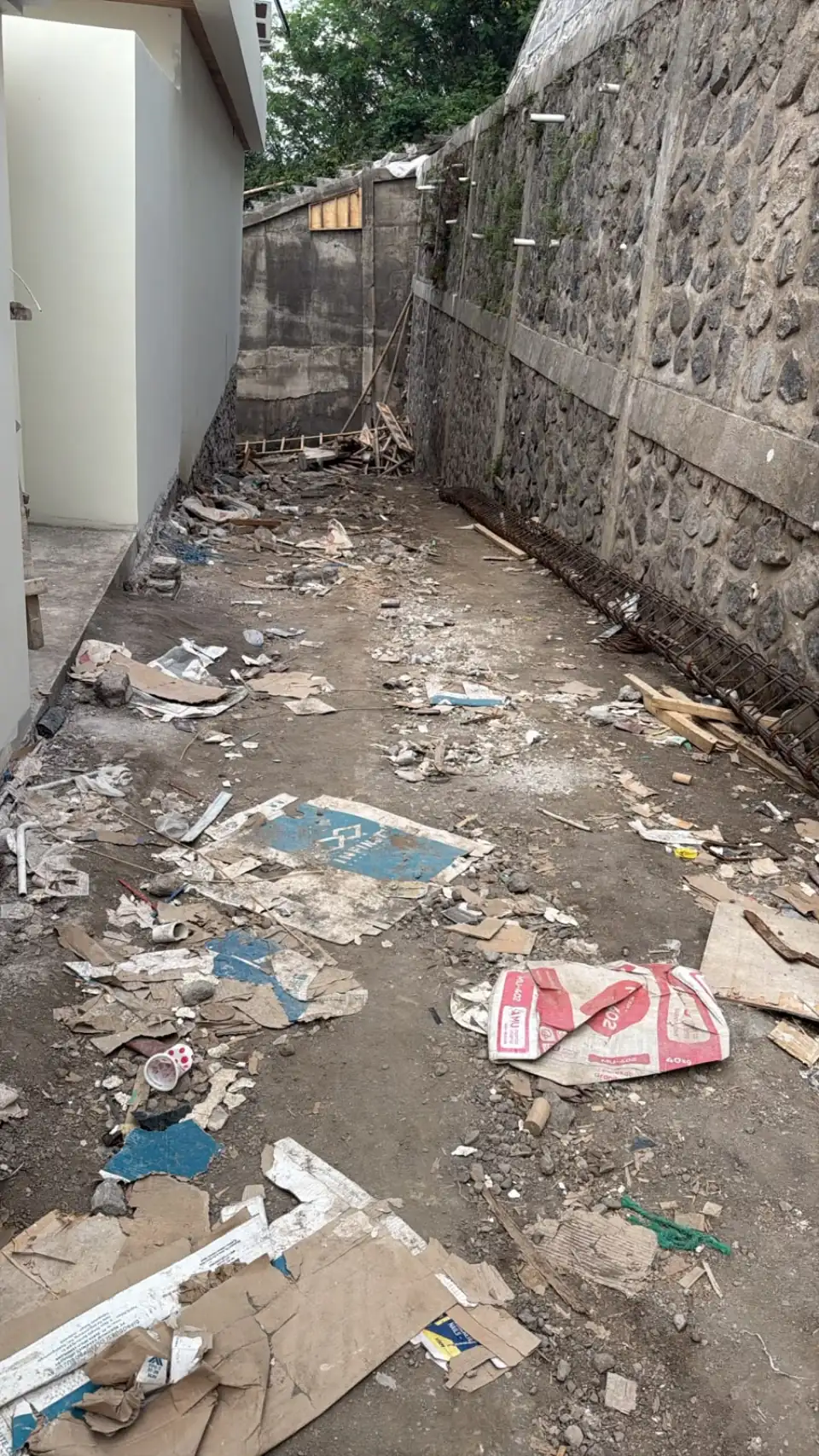
The actual-condition photo helps define cleanup, material sorting, access safety and readiness for subsequent work.
SERVICE FIT
When to choose Property Maintenance Coordination?
Planned maintenance separates inspections, preventive tasks, corrective repairs, emergencies, statutory or specialist service, warranties and capital replacement. Condition history helps identify patterns before damage expands.
- Owners of villas, homes, hotels, rentals or commercial property in Bali
- Owners outside Bali needing recurring condition records
- Several assets, vendors, warranties and schedules require control
- Recurring damage requires investigation before cosmetic repair
DECISION PURPOSE
Start with the decision that needs to be made.
The maintenance plan defines assets, areas, frequency, criteria, access, owners, methods, safety, evidence, escalation, warranties and cost approval. Emergencies and regulated work remain with competent parties.
Final scope is set after understanding the location, project stage, documents, involved parties, timeline and reporting needs.
Periodic condition inspections
Preventive-maintenance schedule
Repair-vendor coordination
Condition and cost reporting
RISKS TO MAP
Items to understand before moving forward.
This is not an automatic conclusion. Each item should be tested against documents, actual conditions and agreed responsibilities.
Work is purely reactive without asset and condition history
Vendors repair symptoms without recording causes and warranties
Preventive tasks lack evidence of results, tools, materials and findings
Access, occupants, guests, operations and safety are not coordinated
DELIVERABLES
Asset register
Assets, locations, types, models, dates, warranties, vendors, manuals and criticality are recorded where available.
Maintenance calendar
Inspections, servicing, cleaning, tests, replacement, seasons, owners and frequency are mapped.
Work-order record
Requests, condition, priority, approval, vendor, action, materials, cost, evidence and status are tracked.
Condition report
Recurring findings, risk, warranties, outstanding items, forecast and priority recommendations are summarised.
ENGAGEMENT FORMAT
Scope and duration follow actual conditions.
Available as a one-time baseline inspection, recurring visits, preventive-maintenance coordination or corrective-work support. Emergency response applies only where capacity and specific terms are agreed.
The final proposal states visits or stages, reporting format, involved parties, exclusions and conditions that may change timing.
WORKFLOW
From initial clarification to recorded follow-up.
Clarify
Goal, location, stage, documents, parties, schedule and main decision.
Define scope
Methods, visits, sources, limits, deliverables and report frequency.
Review
Collect evidence, compare information, record gaps and escalate material issues.
Follow up
Separate facts, assumptions, recommendations, decisions, owners and closure status.
STARTING INFORMATION
Information that makes the scope more precise.
- Project location or target area and available access notes.
- Objective, current stage, urgent decisions and deadlines.
- Existing documents, photographs, proposals, drawings, schedules or communication.
- Involved parties and the responsibilities currently understood.
RELATED GUIDES
Prepare better questions before a consultation.
Defect Liability Period Monitoring Checklist
After handover, defects need an active register, owners, deadlines, repair access, evidence, reinspection, warranties, retention and documented closure.
PaintingCommon Building Painting Defects
Peeling, blistering, patchiness and mould often begin with moisture, poor preparation or an unsuitable coating system.
FREQUENT QUESTIONS
Questions before requesting the service.
These answers help prepare the initial information. Price, schedule and availability are confirmed against the actual location and scope.
Are repairs and materials included?
Only where the proposal states so. Inspection, coordination, labour, vendors, materials, tools, transport, testing and payment may involve different parties and prices.
How often are visits needed?
Frequency follows property type, use, critical assets, condition, seasons, warranties, risk, access and local operations capacity.
Is 24-hour emergency response available?
Not automatically. Channel, hours, area, event type, triage, authorised parties, cost and availability require a specific agreement.
RELATED SERVICES
Discuss Property Maintenance Coordination for your project location.
Include location, work type, approximate quantity, condition photographs, target timing and daily or package preference so the request can be assessed faster.