

BALI SERVICE
Remote Project Monitoring
Structured reporting for owners who cannot regularly attend the project site.
FIELD CONTEXT
See the relevant conditions, process and control points.
Images clarify the scope of discussion. Final conditions and methods still follow the survey, documents and actual engagement boundaries.
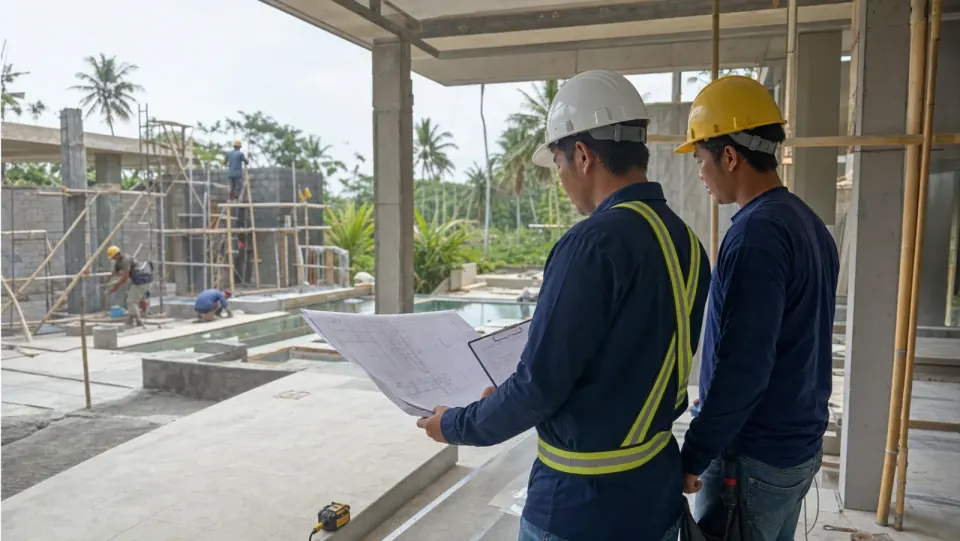
Supervision visits connect actual conditions with progress, quality, materials, labour and corrective action.
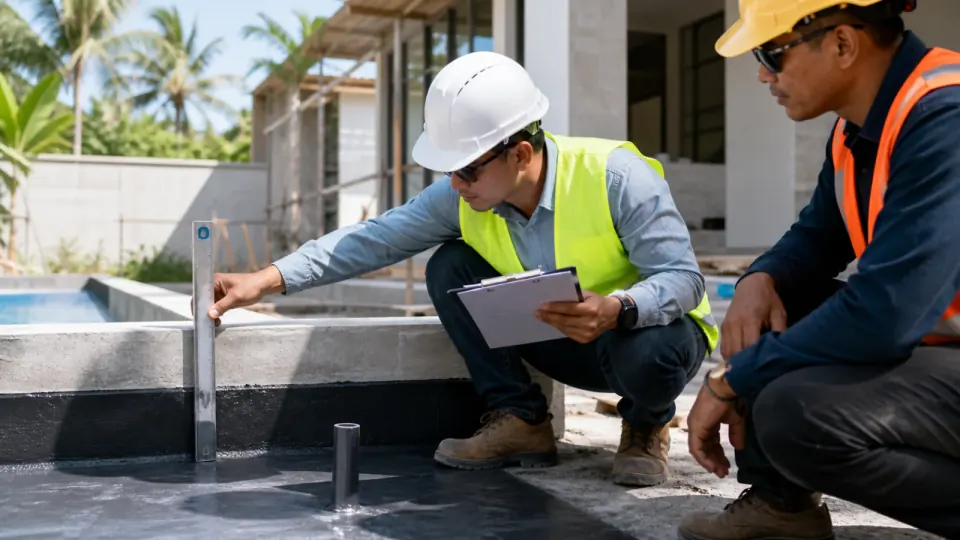
Findings should have a location, evidence, reference, priority, owner and rectification status.
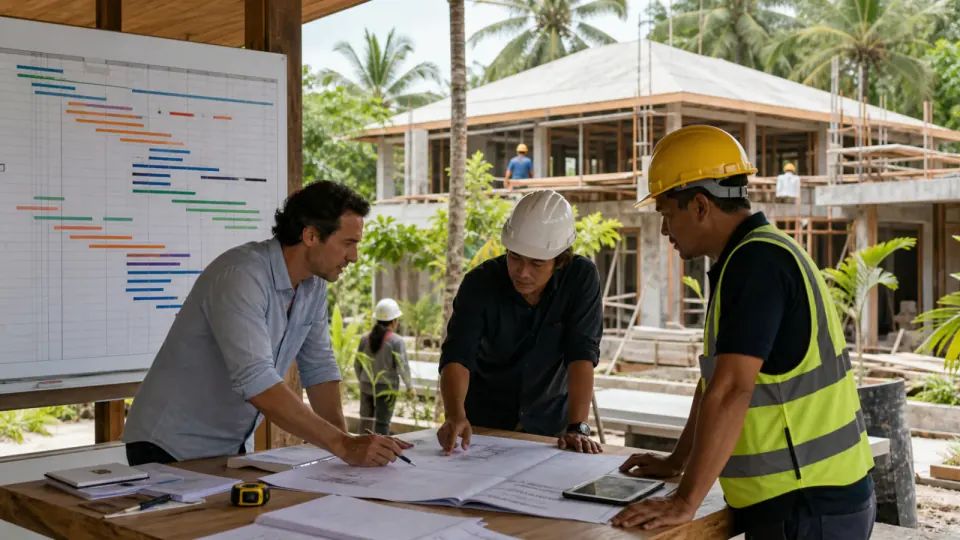
Schedule, cost, quality, risk, changes, stakeholders and owner decisions are controlled together.
DECISION PURPOSE
Start with the decision that needs to be made.
Remote monitoring needs a reporting calendar, consistent evidence viewpoints, an issue list, a decision log and independent verification at agreed checkpoints.
Final scope is set after understanding the location, project stage, documents, involved parties, timeline and reporting needs.
Periodic photos and videos
Progress dashboard and open issues
Site video meetings
Next-action summary
RISKS TO MAP
Items to understand before moving forward.
This is not an automatic conclusion. Each item should be tested against documents, actual conditions and agreed responsibilities.
Photos do not clearly show location, time or scale
Progress percentages are not tied to work items
The owner receives too much information without priorities
Important decisions are scattered across communication channels
DELIVERABLES
Findings summary
Key information, sources, review limits and verification status are structured for review.
Documentation
Photos, notes, comparisons, documents or supporting evidence relevant to the engagement.
Action priorities
Items to clarify, decide, rectify, test or monitor.
Transparent limits
Items needing specialists, testing or further legal review are clearly identified.
WORKFLOW
From initial clarification to recorded follow-up.
Clarify
Goal, location, stage, documents, parties, schedule and main decision.
Define scope
Methods, visits, sources, limits, deliverables and report frequency.
Review
Collect evidence, compare information, record gaps and escalate material issues.
Follow up
Separate facts, assumptions, recommendations, decisions, owners and closure status.
STARTING INFORMATION
Information that makes the scope more precise.
- Project location or target area and available access notes.
- Objective, current stage, urgent decisions and deadlines.
- Existing documents, photographs, proposals, drawings, schedules or communication.
- Involved parties and the responsibilities currently understood.
RELATED GUIDES
Prepare better questions before a consultation.
Managing a Bali Construction Project from Overseas
Owners need consistent reporting, visual evidence, issue tracking, progress verification and a local representative with clear authority.
Owner AdvisoryWhen Do You Need an Owner’s Representative?
An owner’s representative is useful when the owner cannot attend regularly, many parties are involved, or decisions depend on structured site reporting.
RELATED SERVICES
Discuss Remote Project Monitoring for your project location.
Include location, work type, approximate quantity, condition photographs, target timing and daily or package preference so the request can be assessed faster.