
The short answer
A useful daily report identifies who attended, where work took place, what was planned, what was actually completed and which decisions are needed for tomorrow. Add units, photograph references, an action owner and a record review. A message saying 'work continued today' does not provide enough detail.
1. Agree the reporting method before work starts
Choose one site recorder and one recipient representing the owner or property manager. Agree when reports are sent and who can instruct changes. Keep dates and area identifiers consistent so the report, photographs, quotation and material records can be matched without guessing the location.
Attendance can use worker codes, roles, team numbers and the agreed start, finish and break times. Reports shared with others do not need private identity numbers or personal telephone numbers. Record area transfers or stoppages separately, so attendance is not mistaken for installed output.
2. A blank daily worker report template
Copy this table into a document or worksheet. Add a work row in the same format for each additional task. If a quantity cannot yet be checked, write 'not yet measured' rather than turning an estimate into an apparently confirmed figure.
| Report field | Information to enter |
|---|---|
| Date and area | [Date] — [location/wall identifier] |
| Recorder and recipient | [Agreed contact names or initials] |
| Attendance and hours | [Worker codes/roles/numbers; start, finish and breaks] |
| Task and target | [Work description; area; target; unit] |
| Today’s output | [Checked quantity; unit; unfinished portion] |
| Photograph references | [Photo number/filename; location; stage] |
| Materials and equipment | [Available; missing; responsible supplier] |
| Delays and decisions | [Issue; effect; required decision; action owner; deadline] |
| Next work period | [Tomorrow’s task; readiness conditions; responsible person] |
| Record review | [Reviewer; time; corrections or acceptance of the record] |
3. A completed illustration, not a BPP project report
Every identifier, time and quantity below is made up to demonstrate the format. This is not Candidasa Hills or Padma Nabha progress, a worker productivity standard or BPP’s working-hour policy. Set daily targets for the actual agreed task and conditions.
| Field | Illustrative entry |
|---|---|
| Date/area/contacts | Illustration day 1; wall A01; recorder P; recipient O |
| Attendance | T1: tradesperson; P1: helper. Each attends 08:00–12:00 and 13:00–16:00; break 12:00–13:00 |
| Task and target | Plaster face A01; illustrative target 8 m²; wall boundaries marked |
| Recorded output | 6 m² jointly measured; 2 m² of target unfinished; workmanship acceptance pending inspection |
| Photographs | F01: before; F02: end of day; same viewpoint and marked wall boundaries |
| Readiness/delay | Next section awaits an edge-detail decision; O to respond before the next task |
| Next step and review | Continue only after detail approval; O reviews the record and marks any correction |
4. Record daily output without counting the same area twice
Separate today’s output, cumulative output and items requiring correction. If the same surface is reworked, identify it as a repair under its area code rather than unexplained new output. Use an appropriate unit, such as square metres of plaster, and state whether one or both wall faces are included.
When a task cannot yet be measured, describe the activity and stage specifically, such as marking wall boundaries or moving materials into the work area. Avoid completion percentages without a defined basis. Photographs help identify locations and stages, but do not necessarily establish dimensions, concealed work or workmanship acceptance.
5. Turn delays into clear follow-up actions
Instead of writing 'materials missing', name the required item, the affected area, the supplier and when an answer is needed. Also record blocked access, outstanding colour decisions or weather affecting a task. Explain the work impact without assigning blame before the information has been checked.
End with the next task and its readiness conditions. If additional people, days or work are required, seek approval through the agreed process. Attendance and output in a daily report do not automatically approve extra charges; those decisions need their own approval record.
6. Review the record and retain corrections
The recipient checks area identifiers, quantities, units, photographs and unanswered questions. Record the reviewer and review date. When corrections are needed, retain the original and revised versions. Agreement that the record is accurate differs from final work acceptance or payment approval; make each status clear.
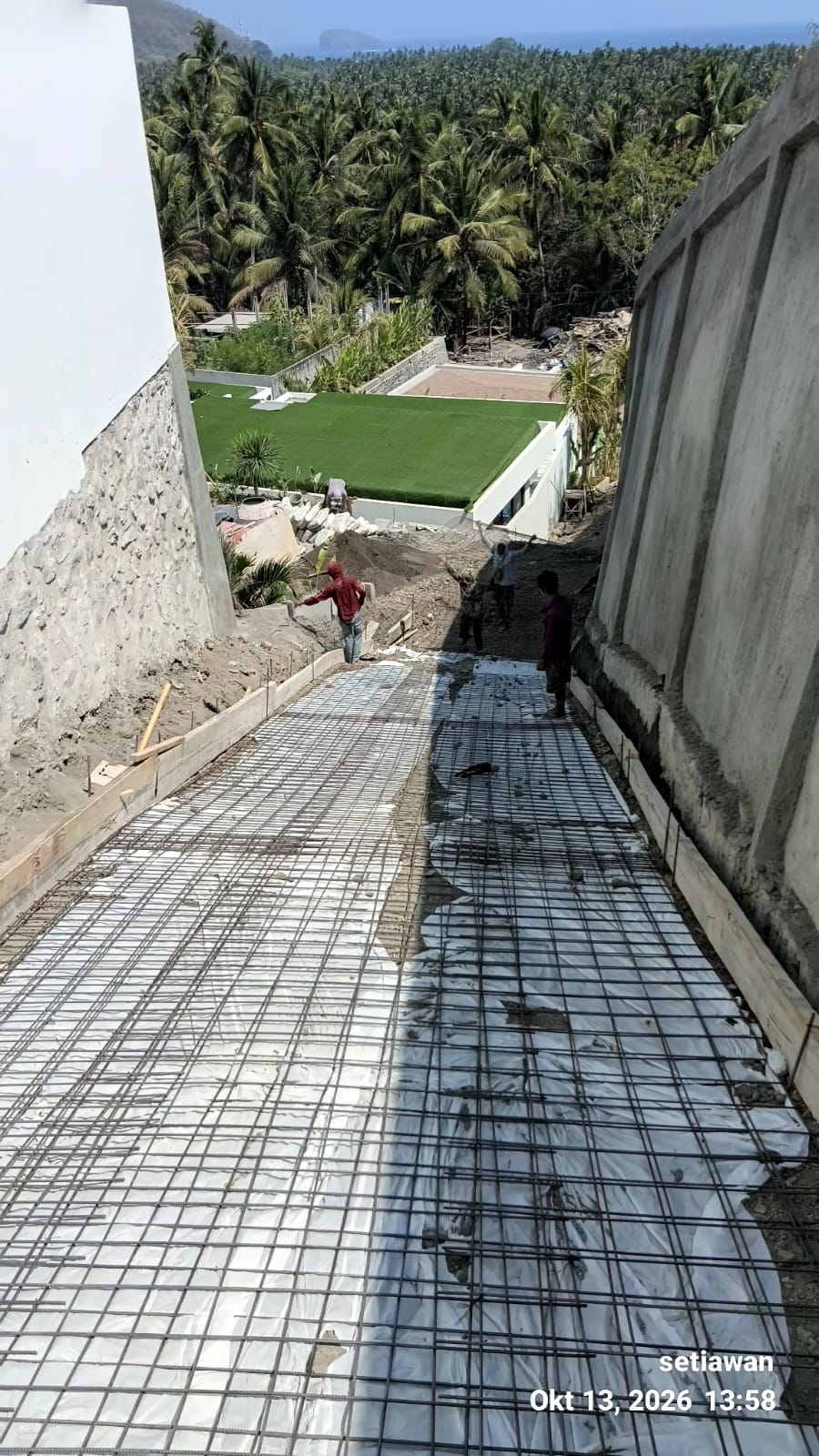
To discuss daily workers or a BPP labour package in Bali, send the tasks, location, current photographs and the reporting format you require. The Candidasa Hills photograph on this page documents BPP’s civil workforce involvement, not the invented figures in the example report.
What to send for a quotation
- Location, area identifiers, tasks, approximate quantities and dates when workers are needed.
- Site contact, report recipient, submission time and the person authorised to instruct work.
- How attendance, hours, output units, photographs, delays and revisions will be recorded.
- The required report format and whether recording and review tasks are included in the quotation.
Questions before work starts
- Who reviews the report when the owner is away from the site?
- Is output marked as measured, awaiting inspection or accepted?
- How are additional work and cost approvals recorded separately from the daily report?