
The short answer
A pebble wash quotation for paths and stairs should separate base preparation, the main finish, edges, joints, drainage and protection. Approve a physical sample and acceptance process before agreeing the price. A textured appearance alone does not establish safe footing in every wet condition.
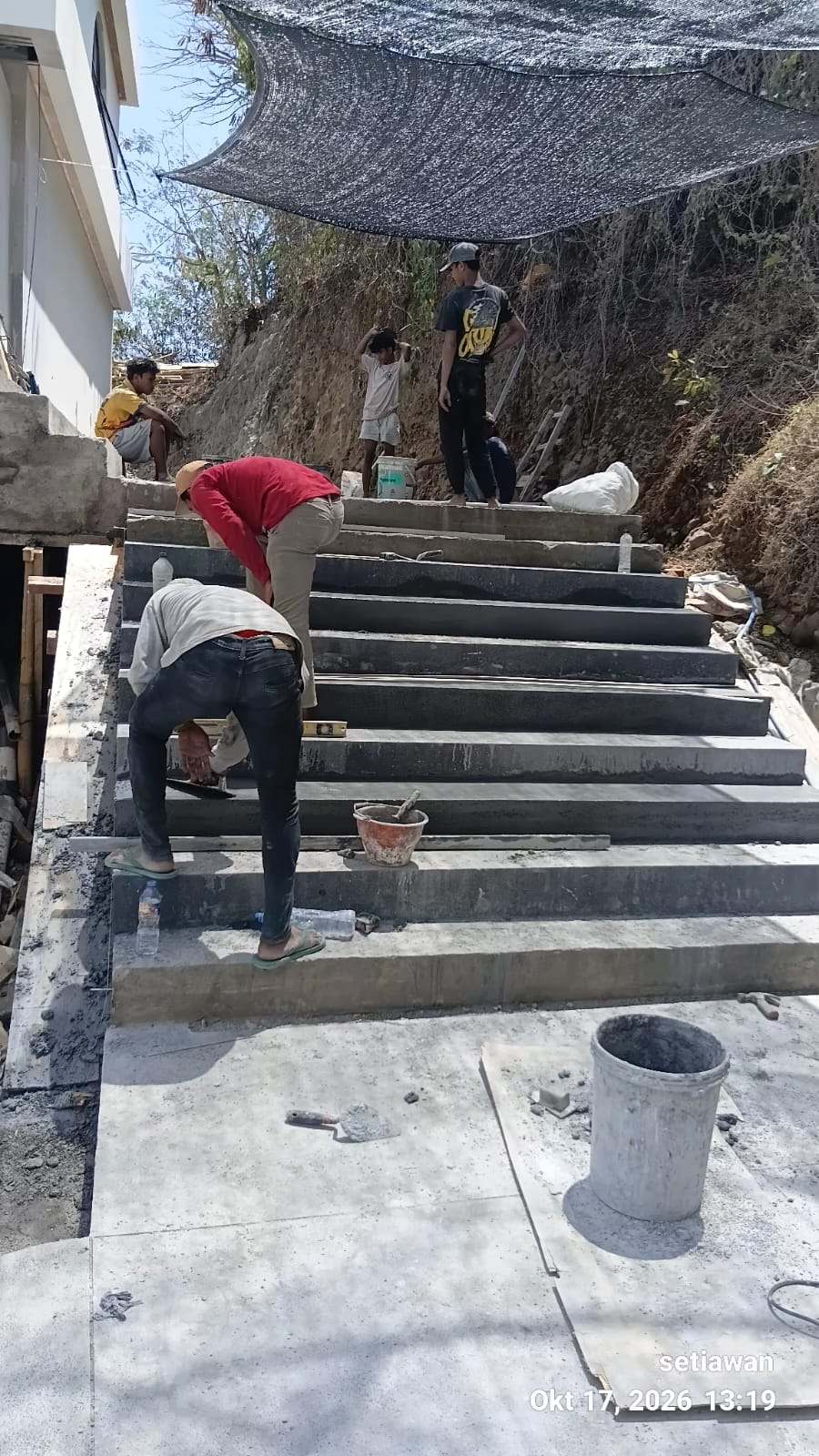
1. Describe how the route is used, not just its area
A private garden path, a villa guest entrance and service stairs have different practical requirements. Explain whether people carry suitcases, walk barefoot or use trolleys. Share the Bali location, photographs of the whole route, shaded sections, observed rainwater flow and hours when access must remain available. This information helps define the enquiry before a visit.
For stairs, record the number of steps, width, landings and surfaces to receive the finish. Separate treads, risers and edges or nosings. If the stair geometry needs changing, obtain a design decision first. Applying a finish does not automatically include correcting stair design or structural work.
2. Approve a sample you can keep as a reference
Request a sample using the stone, colour mix, binder and method proposed for the main installation. Review its appearance dry and wet, under the lighting at the site. Phone photographs help retain a record, but should not be the sole colour reference. Keep the approved sample with its date and material identification.
For one exposed-aggregate method, the Sika Rugasol G documentation explains that materials, temperature and execution timing affect aggregate exposure, and recommends preliminary trials. This supports asking for a method trial instead of applying one washing schedule to every mix. The reference does not establish that this product was used in BPP’s project documentation.
3. Compare scope before comparing a square-metre rate
A pebble wash price per square metre becomes comparable when the packages contain the same work. Request separate measurements for main surfaces and details. Do not assume a flat-area rate includes stairs or curved edges. Use this table as a clarification sheet, completed with the actual site conditions.
| Work component | Record to prepare | Quotation question |
|---|---|---|
| Base and repairs | Agreed conditions and repair area | Are removal, levelling and repairs included? |
| Main pebble wash surface | Net area under agreed measurement rules | Which stone, thickness, pattern and sample are approved? |
| Stairs and edges | Count, dimensions and detail lengths | How are treads, risers, nosings and curves measured? |
| Drainage and joints | Outlet locations and drawn details | Who prepares falls, drains and joints? |
| Protection and handover | Stages and acceptance criteria | Are sealer, access protection and cleaning included? |
4. Review water flow, the base and adjoining materials
Identify previous ponding, visible cracks and junctions with planting, walls, drains or other floors. Agree who assesses the base and prepares the drainage and fall details. Check water flow and record the result at an agreed stage before work is concealed. Where repairs are needed, obtain approval for their scope before proceeding.
Request a drawing or sketch of edge details and joints to be continued. Joint positions should not be decided from a decorative pattern alone. For a main entrance that remains in use, divide the work into sections and identify a temporary route. The plan should also address rain, other trades crossing the area and who authorises reopening.
5. Discuss texture, sealer and cleaning before installation
The agreed texture should account for use and cleaning, rather than simply looking rough. If slip-resistance testing is required, specify the method, test conditions and responsible assessor. Avoid an unconditional promise of slip-proof performance. The Sikagard Natural Look Clear Sealer documentation also recommends trial application to assess appearance and slip resistance. Suitability of the locally selected product still needs checking.
At handover, request cleaning products, tools and methods compatible with the installed system. Arrange checks for leaves, soil, algae, blocked drains, loose stones and cracks. Before aggressive cleaning or resealing, confirm the permitted procedure with the supplier. Record changing conditions so repair needs can be assessed instead of being covered by an additional coat without investigation.
6. Prepare a useful enquiry for BPP
Send the location, access photographs, approximate dimensions, stair details, preferred appearance and proposed dates. State whether you need labour only or labour and materials, then request written responsibilities for materials, tools, water, electricity and waste removal. Final pricing needs a clear scope and site conditions; this guide does not prescribe a market rate or standard mix.
The Candidasa Hills stair documentation illustrates pebble wash work within that project. BPP’s role in the civil works was workforce provision. Use the documentation to discuss relevant labour experience and your requirements. The specification, quantities and acceptance arrangements for a new project must still be agreed separately.
What to send for a quotation
- Bali location, route use, access photographs and proposed working dates.
- Surface dimensions, step count, landings, edge lengths and scope boundaries.
- A physical sample identifying stone, colour, materials and method.
- Responsibilities for base repairs, falls, drainage, joints and any sealer.
- Temporary access, work protection, inspections and cleaning instructions.
Questions before work starts
- Do both quotations use the same sample and measurement rules?
- Who repairs the base and confirms water flow before finishing?
- Does the quotation separate main surfaces, stairs, edges, drainage and protection?
- How will texture, completed work and maintenance instructions be accepted?
Related guides
Product references
These are examples of manufacturer documentation. Use the documents for the products and system actually selected for the project.